


What Is the Sweet Spot in a Padel Racket?

Every padel player has experienced it, the difference between a shot that feels effortless and one that jars the arm and sends the ball off target. That contrast comes down to one key concept: the sweet spot.
Understanding where the sweet spot is, why it matters, and how to hit it consistently can dramatically improve your game. It’s not just about hitting harder, it’s about playing smarter, with better control and less strain on your body.
What Is the Sweet Spot?
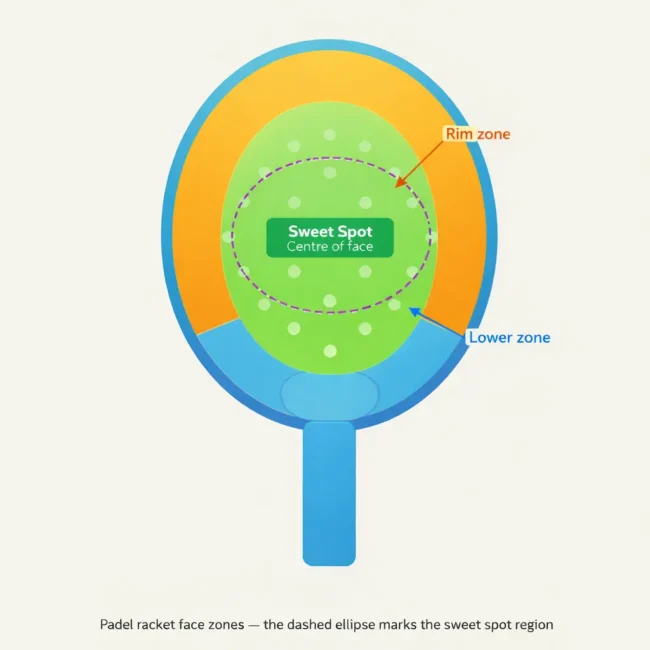
The sweet spot in a padel racket is the area on the racket face that delivers the most efficient contact, producing maximum power, better control, and minimal vibration. It occurs where energy transfer, rebound, and vibration reduction overlap.
Technically, this “perfect contact” happens where three physical properties overlap: the point of minimal vibration, the area of optimal energy transfer, and the section of the face that rebounds the ball most effectively. When these align, the shot feels smooth, stable, and precise.
This is why a clean hit often feels almost effortless because, from a physics standpoint, it is.
Why Hitting the Sweet Spot Matters
Consistent sweet spot contact changes both performance and comfort on the court. Shots become more predictable, and you don’t need to swing harder to generate pace.
When you hit the sweet spot, you typically get:
- More power from the same swing speed
- Better directional control and accuracy
- Significantly reduced vibration in your arm
In contrast, off-centre hits lead to:
- Loss of ball speed and depth
- Less control over shot placement
- Increased strain on the wrist and elbow
Even being just a few centimeters off can noticeably reduce shot quality.
Where Is the Sweet Spot Located?
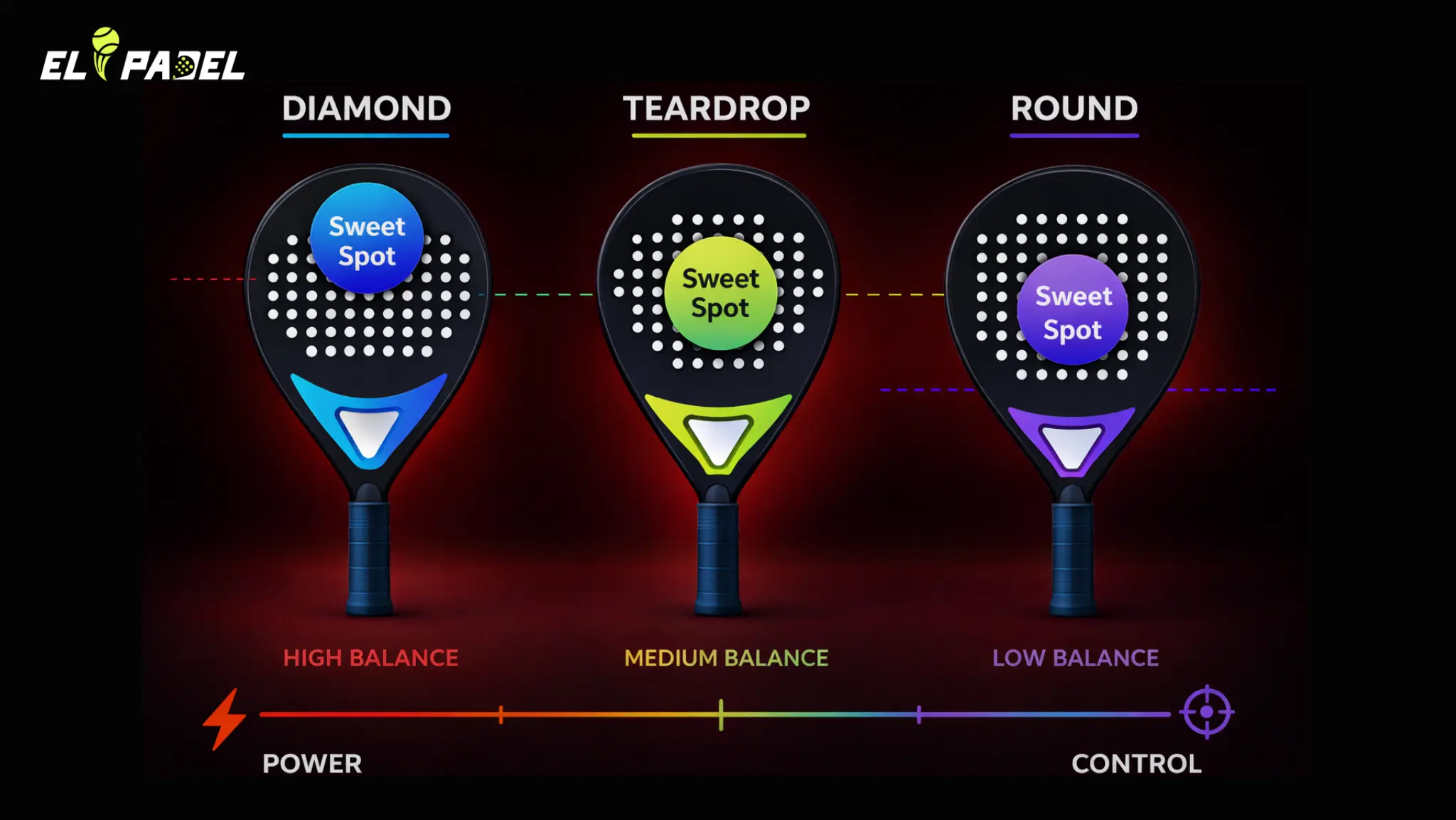
On most padel rackets, the sweet spot sits around the middle section of the face, roughly halfway between the handle and the tip. However, its exact position depends heavily on the racket’s shape.
Different shapes shift the sweet spot in ways that influence how the racket plays:
- Round rackets place the sweet spot lower and closer to the handle, making them more forgiving and control-oriented
- Diamond rackets push the sweet spot higher toward the tip, increasing power but requiring precise timing
- Tear-drop rackets position the sweet spot near the center, offering a balance between control and power
- Hybrid designs adjust the sweet spot to suit different playing styles and skill levels
This is why choosing the right racket shape has such a big impact on consistency.
How Racket Materials Affect the Sweet Spot
The internal core and surface materials of a racket significantly influence how the sweet spot behaves during impact.
Rackets with a firmer EVA core tend to feel more precise but demand cleaner contact. Softer cores, on the other hand, absorb more impact and spread energy across a wider area, making the sweet spot feel larger.
In practical terms:
- EVA foam cores
- Firmer feel and higher control
- Smaller, more precise sweet spot
- Soft foam cores
- More forgiving on mishits
- Larger effective sweet spot
- Carbon fiber faces
- Faster rebound and improved spin potential
- Slightly reduced margin for error
These differences explain why some rackets feel “easy to play with” while others reward only clean technique.
What Happens When You Miss the Sweet Spot?
Missing the sweet spot doesn’t just reduce performance, it changes the entire feel of the shot.
When contact occurs near the frame, the racket twists slightly in your hand. This twisting force, known as torque, travels directly into your arm. Over time, repeated mishits can contribute to overuse injuries, particularly around the elbow.
From a performance perspective, off-center hits lose efficiency. The ball leaves the racket with less speed and a less predictable trajectory. This is why mishits often feel like they “should have gone in” but don’t, the energy transfer simply wasn’t clean.
Even being a couple of centimeters off can make a noticeable difference.
Choosing the Right Sweet Spot for Your Level
Your ideal racket should match your current ability, not your future ambitions. The size and position of the sweet spot play a major role in this decision.
A simple guideline:
- Beginner (0–1 year)
Larger sweet spot, round or tear-drop shape, softer core - Intermediate (2–4 years)
Balanced sweet spot, tear-drop or hybrid shape - Advanced (5+ years)
Smaller sweet spot, diamond shape, firmer core - Players with arm issues
Prioritize comfort with softer materials and a larger sweet spot
Choosing incorrectly often leads to frustration and inconsistent performance.
How to Hit the Sweet Spot More Consistently
Improving your contact point doesn’t require complicated training methods. In fact, small adjustments often produce the biggest results.
One of the most effective techniques is simply making your contact visible. Lightly applying chalk or powder to the racket face during practice allows you to see exactly where the ball is striking. Many players are surprised to discover their contact point is slightly off-center.
Video analysis can also be extremely useful. Watching your swing in slow motion helps you identify timing issues that are difficult to feel in real time.
Grip pressure is another overlooked factor. Holding the racket too tightly restricts natural movement and often leads to late contact. Loosening your grip slightly can help the racket flow more freely through the ball, naturally improving strike location.
Even professional players regularly recalibrate by starting sessions with slower, controlled shots, focusing purely on clean contact before increasing intensity.
FAQs
Yes, progressively. Core foam degrades and loses density over time, especially with frequent play in hot conditions. An EVA core racket used 3–4 times per week may start showing reduced elasticity and a narrower effective sweet zone after 12–18 months of use.
No, they reduce vibration transmitted to the arm but do not change the physical location or size of the sweet spot. They make mishits feel less punishing but do not make off-centre contact more powerful.
Physically, yes the same face zone applies. However, for overhead shots the contact point on the ball changes angle relative to the racket face, so players often perceive the sweet spot as feeling slightly higher during smashes due to wrist extension at contact.
Absolutely. Children lack the fine motor consistency to time the ball toward a small zone reliably. A wide sweet spot preserves enjoyment of the sport while motor patterns are still forming. Restricting performance rackets too early does nothing to speed up skill development.