

Padel Tennis Court Installation Process

The sport of Padel tennis experiences fast worldwide growth. So, the market demand for Padel tennis court construction keeps increasing at a rapid rate. The installation process demands understanding from anyone establishing a Padel tennis court either in sports clubs or domestic or commercial sites. This guide provides an organized procedure for constructing paddle courts with international standards.
- Selecting the Right Location
The first necessary stage in Padel tennis court installation demands selecting an appropriate site. Key factors to consider include:
- Space Requirements
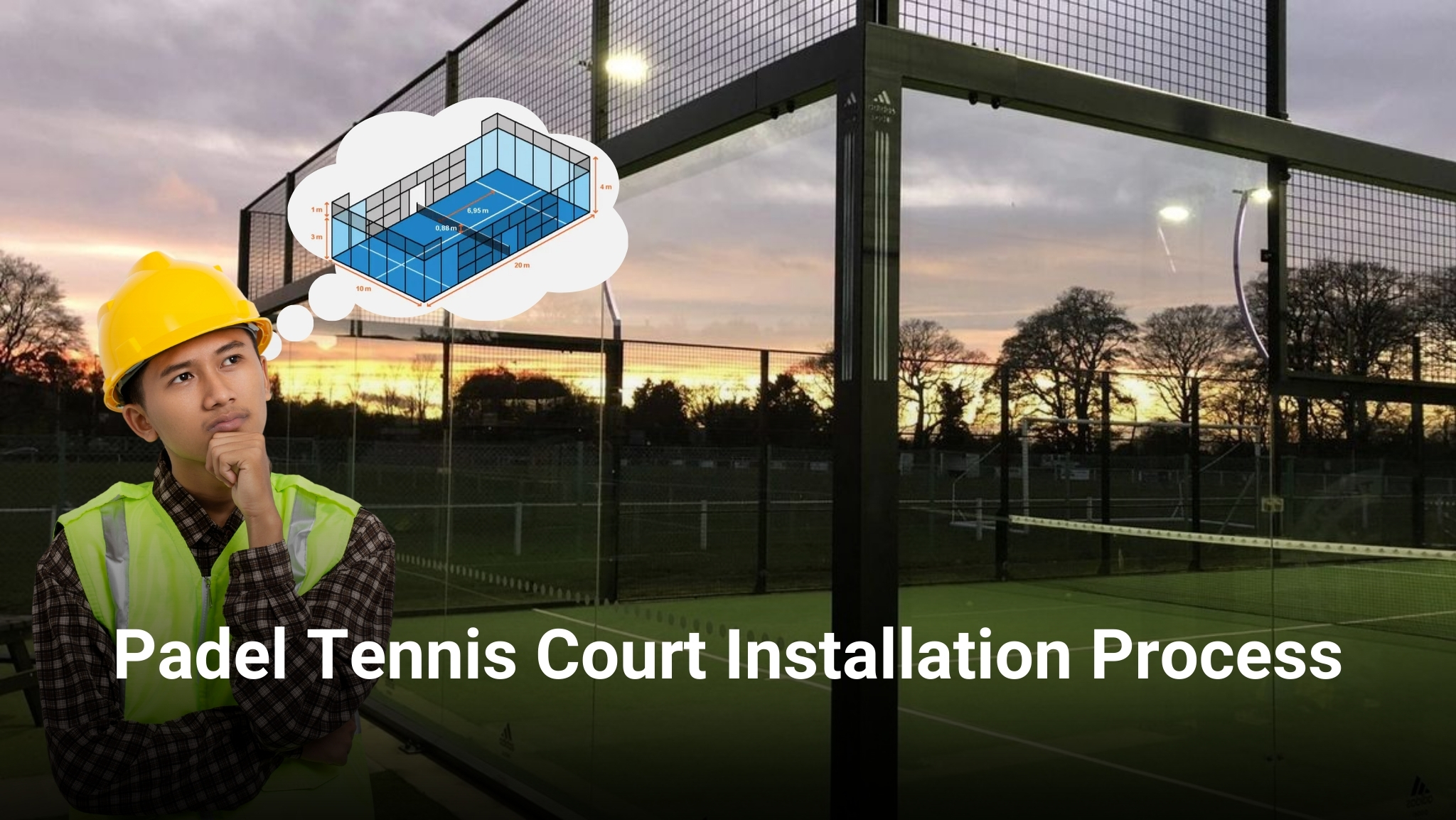
A standard paddle court measures 20m x 10m, with additional space for player movement.
- Surface Leveling
The ground must be even and free from obstacles to ensure a smooth installation.
- Ventilation & Noise Considerations
For an indoor tennis court in Dubai, proper ventilation ensures a comfortable playing environment.
- Drainage System
An effective drainage system must be implemented within outdoor courts because it prevents water buildup and improves court durability.
- Preparing the Foundation
A solid foundation is critical for a durable and long-lasting Padel tennis court. The preparation involves:
- Excavation & Groundwork
The area is cleared, leveled, and compacted.
- Concrete or Asphalt Base
A reinforced concrete or asphalt base is laid to support the court structure.
- Slope Adjustment
A slight slope (0.5%-1%) ensures proper water drainage for outdoor courts.
According to industry standards one requires a 10cm thick concrete base reinforced with steel mesh for maximum durability.
- Installing the Padel Court Frame & Walls
The structure of a paddle court consists of metal framing and tempered glass walls. The installation includes:
- Steel Frame Construction
High-quality galvanized steel is used for durability and rust resistance.
- Tempered Glass Walls
These 10-12mm thick glass panels enhance gameplay, safety, and visibility.
- Secure Fastening
The frame and walls are bolted securely to withstand high-impact play.
The FIP regulations require glass panels to be at least 10mm thick to ensure player safety and structural stability.
- Choosing & Installing the Playing Surface
The playing surface is crucial for gameplay quality. Most courts use artificial turf, which offers excellent grip and comfort. The process includes:
- Artificial Grass Selection
High-performance synthetic grass ensures durability and shock absorption.
- Proper Infill
A 20-25 kg per square meter silica sand infill is spread across the turf for stability.
- Line Marking
The Court lines are marked according to international padel standards.
- Setting up the Lighting System
The players need appropriate lighting for clear sight and comfortable gameplay during padel tennis matches. The key elements are:
- LED Floodlights
These energy-efficient lights provide uniform brightness and reduce shadows.
- Strategic Placement
Lights are positioned at a height of 6 meters to minimize glare.
- Regulation Compliance
Lighting must meet international standards, providing at least 300-500 lux for recreational play and 500-750 lux for professional use.
- Installing the Net & Final Touches
The final phase includes setting up the net and making last-minute adjustments:
- Net System:
The net is positioned at the correct height of 88 cm at the edges and 92 cm in the middle.
- Final Safety Checks
A thorough inspection ensures structural integrity and compliance with international standards.
- Cleaning & Testing
The court is cleaned, and a test game is conducted to check surface quality.
- Maintenance
To ensure longevity and peak performance, regular maintenance is necessary. Key maintenance tasks include:
- Surface Cleaning:
Regular maintenance of removing dirt and debris helps to avoid material breakdown.
- Glass Inspection
Checking for cracks or damage ensures player safety.
- Net & Fence Maintenance
Keeping the net and fencing in good condition enhances gameplay quality. Professional maintenance is recommended every 6 months to ensure optimal court performance.
Conclusion
Installation of Padel tennis court facilities demands detailed planning. Every aspect of Padel Court development, starting from optimal site selection to selecting top-quality materials. The selection of best-quality material contributes to creating world-class paddle courts.
Visit the El Padel Store today to find everything you need for your Padel match!